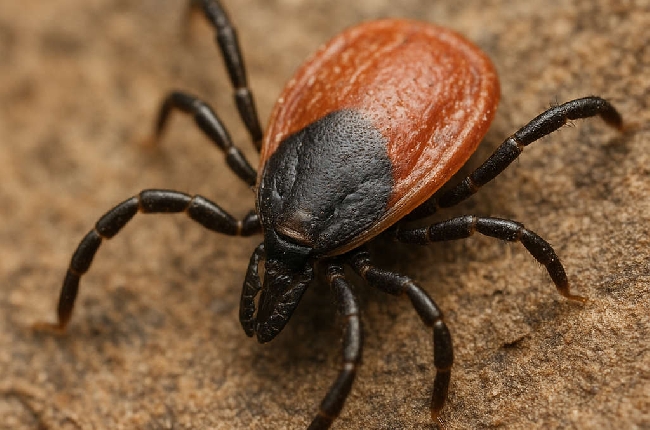
Public health is encouraging residents to protect themselves as the region is considered a high-risk area for ticks carrying Lyme disease, Anaplasmosis and Babesiosis.
With warmer weather arriving across eastern Ontario, Southeast Public Health is warning residents to take extra precautions against blacklegged ticks and the diseases they can spread.
Health officials say the region is considered a high-risk area for ticks carrying Lyme disease, Anaplasmosis and Babesiosis. The insects are commonly found in wooded areas, tall grass and other outdoor spaces during spring and summer.
Public health is encouraging residents to protect themselves by using insect repellent containing DEET or Icaridin, wearing long sleeves and light-coloured clothing, and checking themselves, children and pets for ticks after spending time outdoors.
Officials also recommend showering within two hours of coming inside and placing outdoor clothing in a dryer on high heat for at least 10 minutes to kill ticks.
According to Southeast Public Health, the risk of Lyme disease increases once an infected tick has been attached for more than 24 hours and rises significantly after 48 hours.
Early symptoms of Lyme disease can include fatigue, headaches, fever, muscle pain and rashes. More serious complications may include arthritis, meningitis and heart problems.
Residents with symptoms after a tick bite are advised to contact a health-care provider or pharmacist for assessment and possible treatment.
Story by Ken Hashizume
 Frontenacs overcome early hole, major penalty to beat Generals in overtime
 Queen's University rolls out the welcome mat for the 100th Homecoming
 Loyalist Township looking to add paid on-call firefighters during recruitment drive
 OPP reminds drivers to give cyclists at least one metre of space
 Kingston adds 10 family doctors as recruitment program reaches 43